•Project Showcase - Project in Progress •


Celebrating 15 Years of Excellence

Verde River Restoration
Ashfork, Arizona

Pole and Post Harvest

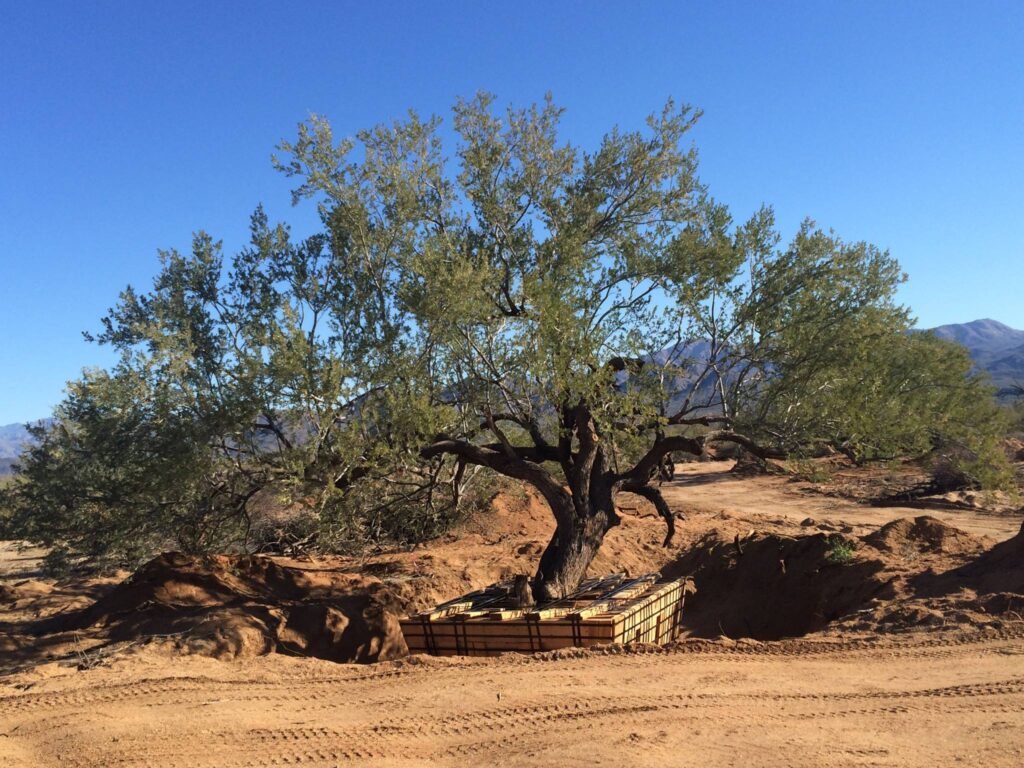
Immediately prior to construction activities by Transwestern Pipeline, Native Resources International (NRI) will harvest a total of 1,186 poles at the Little Hell Canyon and Verde River sites. Representative tree species currently growing at each site will be collected. Salix gooddinggii and Populus fremontii will be harvested for revegetation of the Verde River site. A total of 810 poles, with an average height of 4-5 feet and an approximate diameter of .5”, will be collected at the Verde River site. These poles will be bundled to a diameter of 8”. The total number of bundles will be 54. In addition, 21 posts will be harvested, with an average height of 6-8 feet and a diameter of 4-6”.  A combination of 375 4-5' Salix nigra, Salix gooddinggii and Populus fremontii poles will be harvested and bundled to a diameter of 8”, totaling 25 bundles, for revegetation at the Little Hell Canyon site. Additionally, 25 posts will be harvested with an average height of 6-8 feet and a diameter of 4-6.” Ideally, pole bundles and posts will be planted within 10 days of harvest (after soaking); however, if time and construction activities do not permit this, they will be placed in cold storage (between 33 and 40 deg. Fahrenheit) for up to 6 months.

Sedge and Prickly Pear Collection - Verde River Site

In an effort to keep the existing wetland vegetation community, approximately 2,250 sedges will be collected at the Verde River site immediately prior to construction activities by Transwestern Pipeline. Harvest of wetland species will entail using a coring device (4-6 inch diameter PVC) to remove actively growing vegetation with healthy rhizomes. These will be placed in trays and stored in stock storage tanks at NRI’s office. They can be stored in this manner for up to 3 months, provided they are kept moist. NRI personnel will ensure that they are not allowed to dry out during this period, until the work site is ready for planting. Also at the Verde River site, approximately 78 Prickly Pear plants will be collected by NRI personnel. These will be in the form of cuttings. Healthy individuals currently growing in the upland area of the site will be chosen, and pads will be removed at joints. The Prickly Pear pads will be allowed to callus at the cut end prior to planting.

Little Hell Canyon Installation

Following construction activities and site preparation, NRI will install previously collected pole bundles and posts. Layout will approximate the Little Hell Canyon Detailed Restoration Plan, with consideration given to actual field conditions in order to maximize water availability until the plants become established. Elk are known to browse at the project site, and therefore the posts and pole bundles will be protected from elk activity. 8’ tall horse fence with 2” X 4” mesh spacing and 12.5 wire gauge will be placed around the pole bundles and posts, and stabilized using 7’ T-posts.

Verde River Restoration

Verde River Restoration will consist of erosion control installation, tree revetment installation, wetland species planting, pole bundle and post installation, and upland species planting.

Following construction activities and site preparation, NRI will begin restoration of the Verde River site. Immediately adjacent to the channel, on either side of the stream along the bank, where appropriate, NRI will install EXCEL SD-3 (Curlex III equivalent) Erosion Control Blanket. This blanket is composed of a 100% High Altitude Rocky Mountain Aspen Excelsior matrix, and is designed to provide erosion protection for up to 18 months. Actual field longevity is dependent upon soil and climatic conditions. The blanket will be installed per the manufacturer’s recommendations.

Along the toe of the bank a tree revetment will be placed. The revetment will consist of approximately 40 individual Junipers secured to the bank with 7.5 foot tall t-posts.

Previously harvested sedges will be planted through the erosion control fabric approximately 2 feet on center (this is subject to change dependent upon actual area to be planted).

Immediately adjacent to the sedge planting area, moving away from the low-flow channel, previously harvested pole bundles and posts will be installed. Pole bundles will be placed closer to the channel, and posts will be planted between the pole bundles and the upland area. Because beaver activity is evident at the Verde River site, pole bundles and posts will be protected by caging. 4 feet tall, 2” X 4” mesh cylinders will be placed around the pole bundles and posts, and stabilized using 5” rebar (orange caps will be placed over the rebar ends for safety).

Container Plant Purchase, Delivery and Installation

48 5-gallon Banana Yucca, 22 Globe Mallow, 34 Cat-Claw Acacia, 33 5-gallon Mesquite (substitute for wait-a-minute bush), 13 1-gallon Mesquite, 1-gallon Mesquite, 14 Apache Plume, and 8 1-gallon Cliffrose will be purchased from a Flagstaff native plant supplier and delivered to the Verde River project site. NRI personnel will plant these containerized plants, along with the previously harvested Prickly Pear cuttings, in the upland areas impacted by construction activities. Containerized plants and cuttings will be laid out using random spacing in order to ensure a natural look. During layout, the NRI supervisor will take into consideration mature height and canopy spread of each species.

We will post pictures of this project as soon as available.

Verde River Picture Gallery

Please move mouse over a photo and the playback controls will appear.
(next, previous, play, pause)

Back to Project in Progress


© 2009 Native Resources International. All Rights Reserved.
Privacy PolicySafety PolicyTerms of UseBookmark UsWebmaster